Land Base Change from 2010 to 2023
Summary of the effects of land base change, including fire, human footprint, and forest aging, on vegetation types in the Al-Pac FMA area.
.svg)
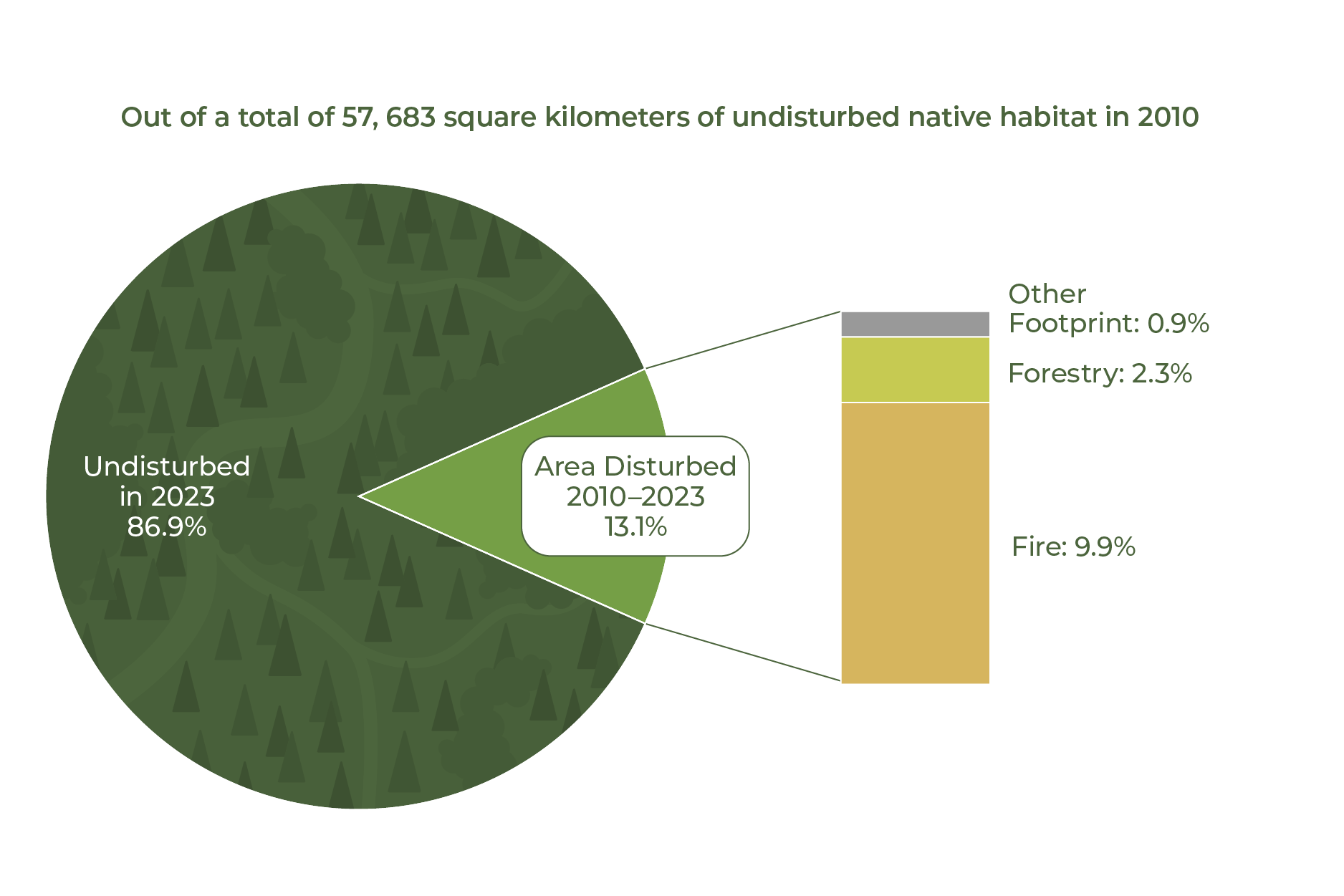
- The vegetation types most affected by the combined impacts of fire and human activity were Pine and White Spruce at ≅26% disturbance.
- Fire on its own contributed 8–23% of the disturbance in upland forests.
- Between 2010 and 2023, old forest (100+ years) in the Al-Pac FMA increased by 6% as maturing stands offset losses from land use and fire.
Methods for summarizing land base changes are described in Section 1.3.2.
Introduction
This analysis adds to the preceding summaries of trend in native vegetation (Section 2.1) and human footprint (Section 3.1) in three ways:
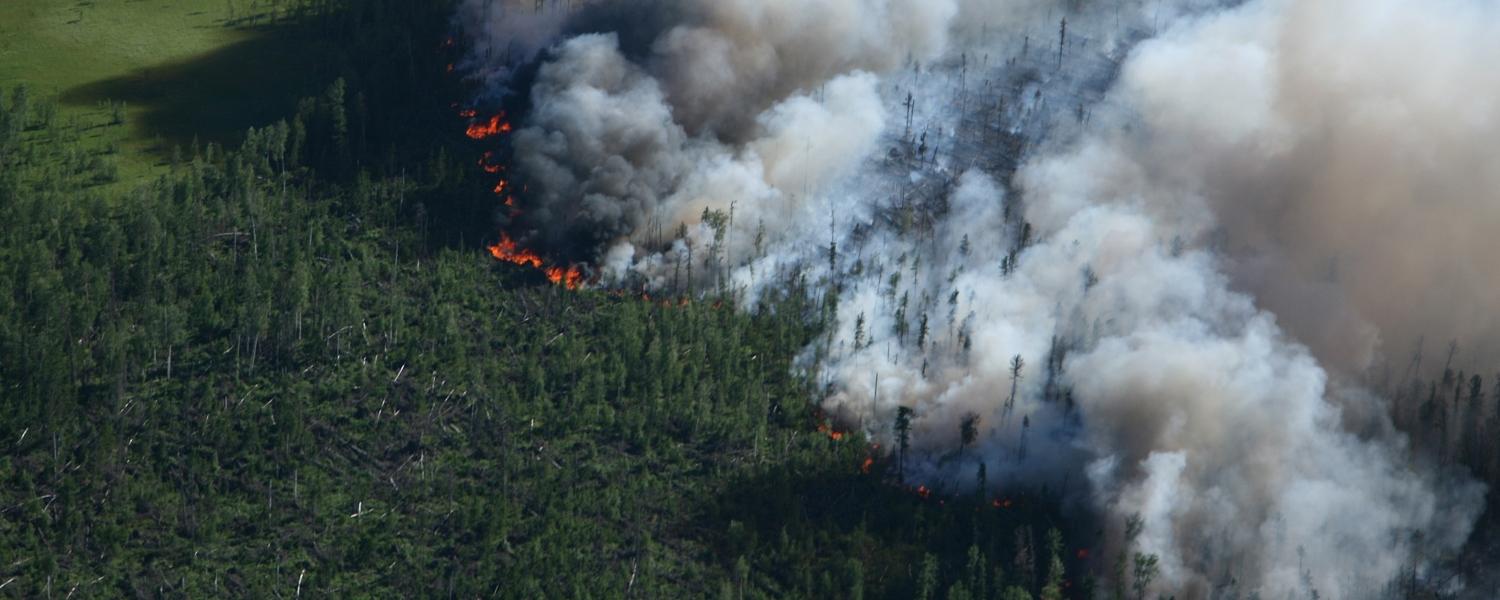
- Along with human footprint, this analysis shows the changes in native vegetation due to fire. In boreal forests, fires—along with other natural disturbances like insect outbreaks and disease—create a mosaic of stands of different ages from young forests to forests more than 100 years old. This shifting mosaic of stand ages across time and space is a foundational process that has shaped biodiversity across the boreal forest of northern Alberta.
- Land base attribution identifies changes in each native vegetation type and attributes them to types of human footprint, summarized here as forestry versus non-forestry human footprint.
- Land base attribution includes the effects of aging in naturally disturbed native stands and harvested areas. For vegetation types with an age criterion, like forest stands, this allows for the tracking of both recruitment and losses within a given age range from fire and human footprint. This provides a clearer understanding of why the age distribution of forests is changing.
In the Al-Pac FMA area, fire is the predominant natural disturbance on the landscape influencing habitats, with more than 8,400 km2 of the FMA area burned in the 2015–2020 period[1]. While wildfires are natural events, there is concern that they are increasing in frequency and severity due to climate change as well as increased fuel loading due to historical fire suppression. Insects and disease also influence native vegetation and forest composition[1].
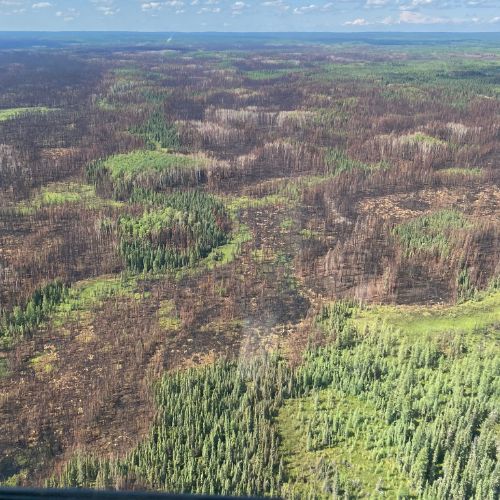

Fires and natural disturbances create a shifting mosaic of young to old forests, shaping biodiversity in Alberta’s boreal forest.
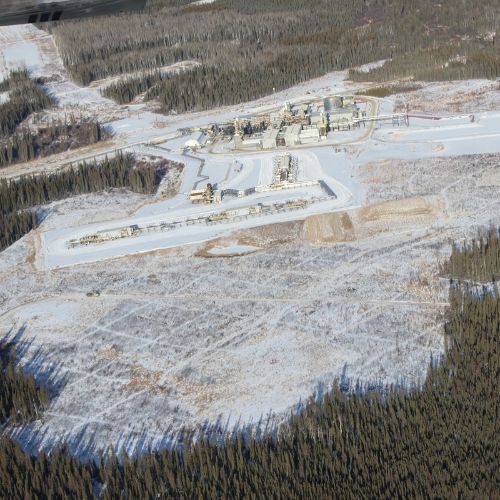
Land uses vary in their impact on habitats, with some like forest harvesting allowing recovery after disturbance, and others such as roads and industrial sites causing permanent loss.
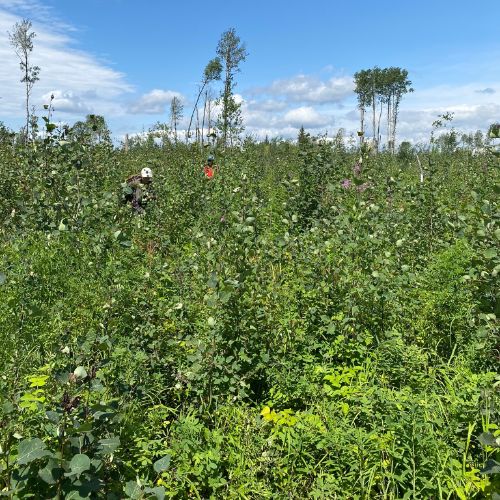
As young forests age, they can offset losses of old forest caused by land use and fire.
Results
The per cent area of native vegetation disturbed by human footprint and fire between 2010 and 2023 in the Al-Pac FMA area was:
- The highest percentage of area disturbed by human footprint occurred in White Spruce (14%), mixedwood (9%), and deciduous (8%) stands in the Al-Pac FMA area, and more moderate rates occurred in Pine stands (3%).
- Fire added 8–23% of disturbance in upland stands over the same 13-year time span, including: Pine (23%), White Spruce (13%), mixedwood (12%), and deciduous (8%).
- When considering the combined disturbed area of both human footprint and wildfire in upland stands, area impacted ranged from 16% to 27%, with the most disturbed forest types being Pine and White Spruce at ≅26% disturbance. For Pine stands, the 26% disturbance rate over 13 years represents a 49-year return interval.
- Stands disturbed by fire and forestry provide early seral habitat valued by some species, and those stands will shift towards older-forest conditions over time (result shown in Section 2.1). However, the high disturbance rates when fire is added to forestry will generate a truncated age distribution, making it challenging to maintain old forest in the long term[2].
Detailed Land Base Change. For the Al-Pac FMA area, the top figure shows the total area (km2) of each vegetation type disturbed by fire, non-forestry human footprint (Other Footprint, New), and forestry footprint between 2010 and 2023, as well as the undisturbed area as of 2023. The bottom figure shows the per cent (%) area disturbed by fire, non-forestry human footprint, and forestry human footprint in each vegetation type between 2010 and 2023.
Detailed Change in Old Forest: 2010 to 2023
- One benefit of the land base attribution summaries is that they identify the causes of change in old forest, including losses from industrial activity and wildfire, as well as the recruitment of forests into the old (100+ year) age class.
- Between 2010 and 2023, the amount of old forest (100+ years) in the Al-Pac FMA grew by 6%, as younger forest aged, offsetting losses from land use and fire. This increase was uneven across forest types, and keeping enough old forest in the future may be more difficult if the frequency of wildfires continues to accelerate due to climate change, especially with the added effects of past fire suppression and higher fuel levels.
- Old deciduous stands show a large net increase of 36% between 2010 and 2023 due to recruitment, more than offsetting a 24% loss due to harvest and fire.
- Old mixedwood stands were impacted similarly by harvest (14%) and fire (12%), and recruitment did not offset these losses, resulting in a decrease of 12% between 2010 and 2023.
- Over a quarter of old Pine stands burned between 2010 and 2023 with additional loss due to forestry, but recruitment across the 100-year threshold led to a 20% increase in area.
- The total area of old White Spruce stands in the Al-Pac FMA area declined by 22% overall between 2010 and 2023, as recruitment did not offset losses from fire and forestry disturbance.
Detailed Land Base Change—Old (>100 years) Forest. For the Al-Pac FMA area, the top figure shows the total area (km2) of old forest by type in 2010 broken into undisturbed area as of 2023, area disturbed by fire, non-forestry human footprint (Other Footprint, New), and forestry footprint between 2010 and 2023, and area recruited into the >100-year-old forest age class between 2010 and 2023. The bottom figure shows the per cent (%) area disturbed by fire, non-forestry footprint, and forestry footprint, and area recruited into the >100-year-old forest age class between 2010 and 2023 in each forest type.
References
Alberta-Pacific Forest Industries Inc. 2022. Alberta-Pacific Forest Products Inc. Forest Management Agreement Area Forest Stewardship Report. Alberta-Pacific Forest Industries Inc. Available at: https://alpac.ca/wp-content/uploads/2021/06/Al-Pac-Stewardship-Report-2015-2020_complete_NCedit_21May21_final.pdf.
Andison, D.W. 2015. Modelling Historical Landscape Patterns on the Alberta-Pacific FMA. North Vancouver, BC: Bandaloop Landscape-Ecosystem Services.
Methods for summarizing land base changes are described in Section 1.3.2.