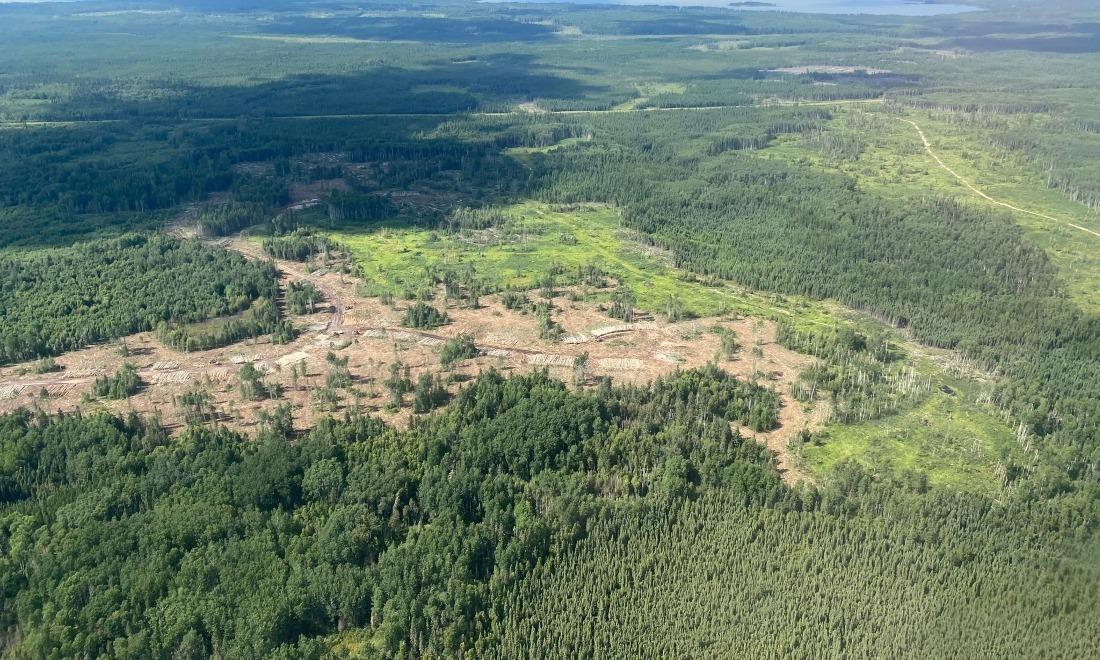
Research Spotlight: Do Harvest Patches Mimic Natural Disturbance Patterns?
Comparison of harvest retention patches and wildfire islands characteristics.
.svg)
Research studies compared forest characteristics of wildfire islands and harvest retention patches. Their findings indicate that retention patches can maintain ecological functions similar to those of wildfire islands.
Refer to reference section for the details of all results presented here.
Introduction
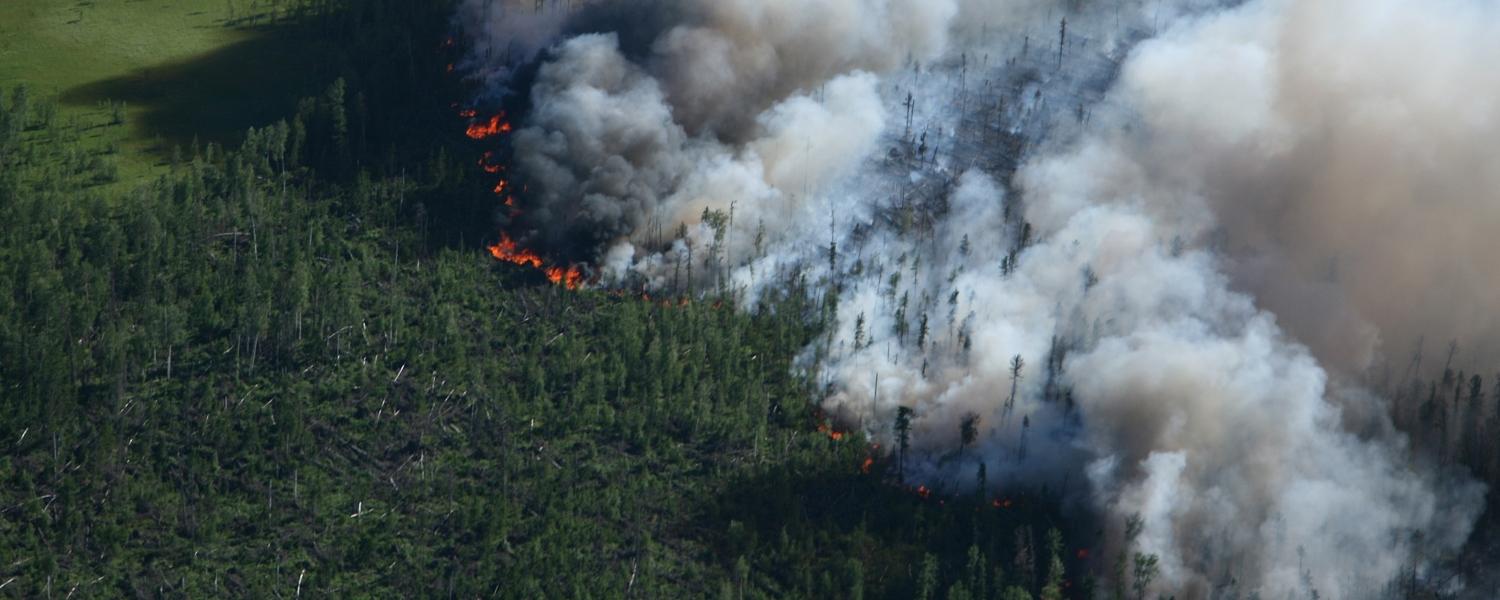
- Unburned patches within fire perimeters, called wildfire islands, play a vital role in supporting biodiversity by providing habitat for species associated with older forests and aiding vegetation regeneration in surrounding burned areas.
- These islands also add to the diversity of forest types and ages, which is essential for maintaining biodiversity. By increasing habitat complexity—through variations in stand age, canopy height, and the mix of live, dead, and fallen trees—they help ensure that more species can find suitable habitat.
- In Alberta, modern forest harvesting practices aim to mimic the patterns left by wildfires through ecosystem-based management. Harvest designs incorporate uncut areas, called retention patches, to maintain a mosaic of forest ages and structures, increasing habitat complexity across the landscape.
- One additional factor affecting patches, regardless of disturbance, is 'edge effects.' Forest edges experience harsher conditions, including more wind, drought, and solar radiation changing environmental conditions at edges compared to the forest interior. Wildfire edges are usually gradual, whereas harvest-block edges are often abrupt, which can lead to different ecological responses.
- Comparing wildfire islands and harvest retention patches helps determine whether they offer similar habitat features and how edge effects differ between them.


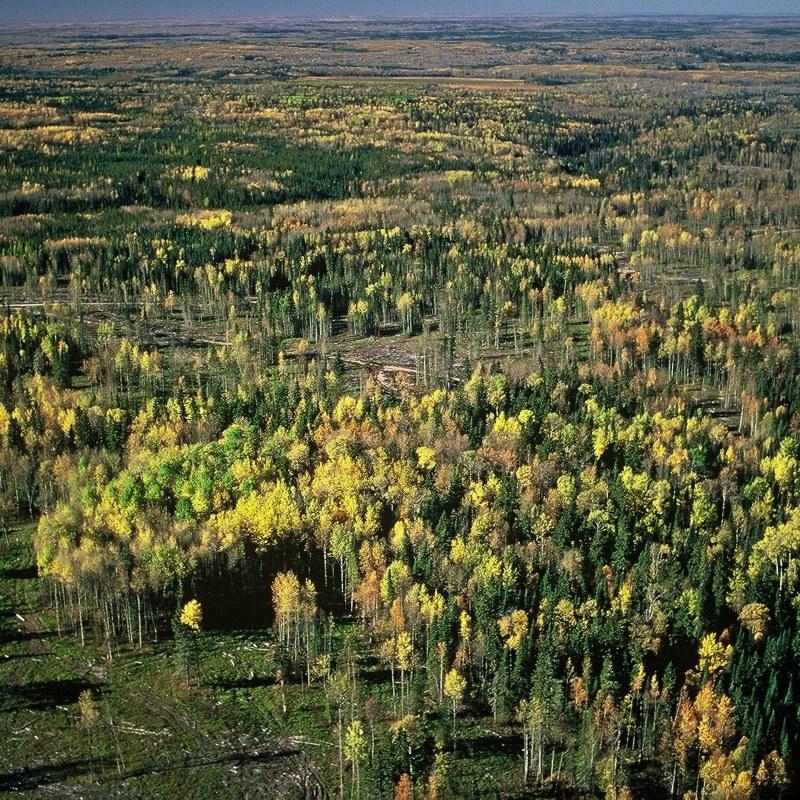
Wildfires burn unevenly across the landscape, creating green islands of unburned forest.
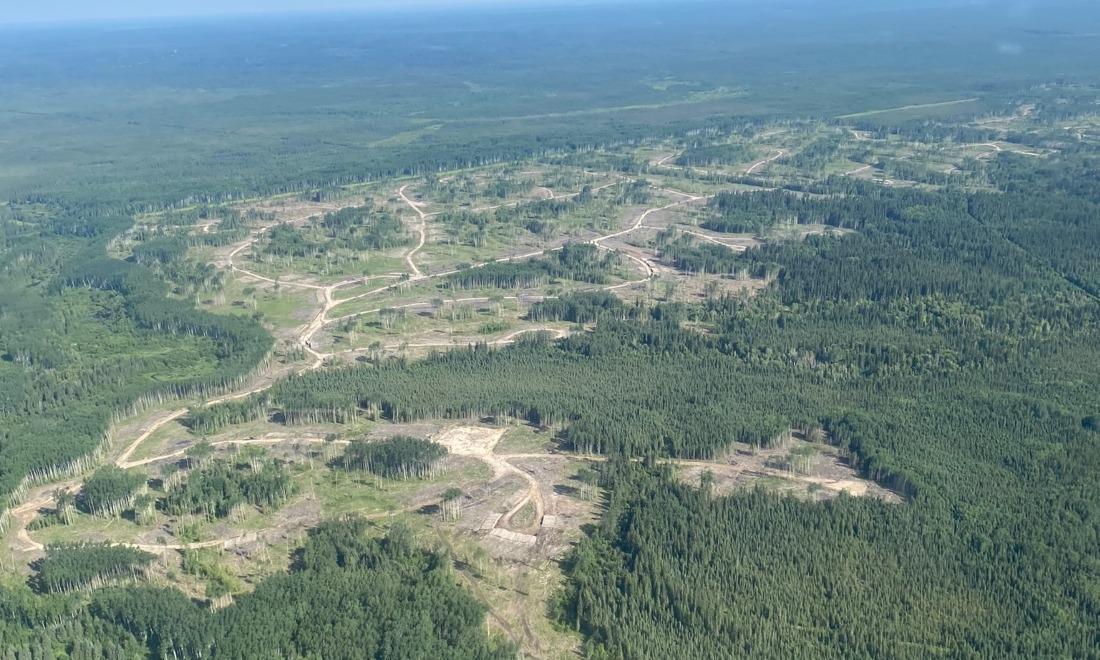
Forest harvest blocks are designed to mimic the size and patterns of natural disturbances.
More About Retention
Harvest blocks are designed to reflect the frequency and patterns of disturbances to maintain forest features similar to naturally occurring conditions. A key component is retention, leaving some trees standing after harvest to maintain forest complexity and support biodiversity by:
- Anchoring around key habitat features, such as large deciduous trees, riparian areas, or trees with nesting cavities, which are important to a range of species.
- Supporting regeneration in harvested areas by providing a seed source or through vegetative regeneration, such as suckering.
- Providing habitat, shelter, and resources for forest-dependent species.
- Preserving habitat features, like large trees and deadwood (snags and coarse woody debris), which are critical for many species.
- Facilitating movement by creating corridors that allow wildlife to move across harvested areas.
By embedding these features within regenerating harvested stands, retention helps sustain essential habitat components and ecological processes over time.
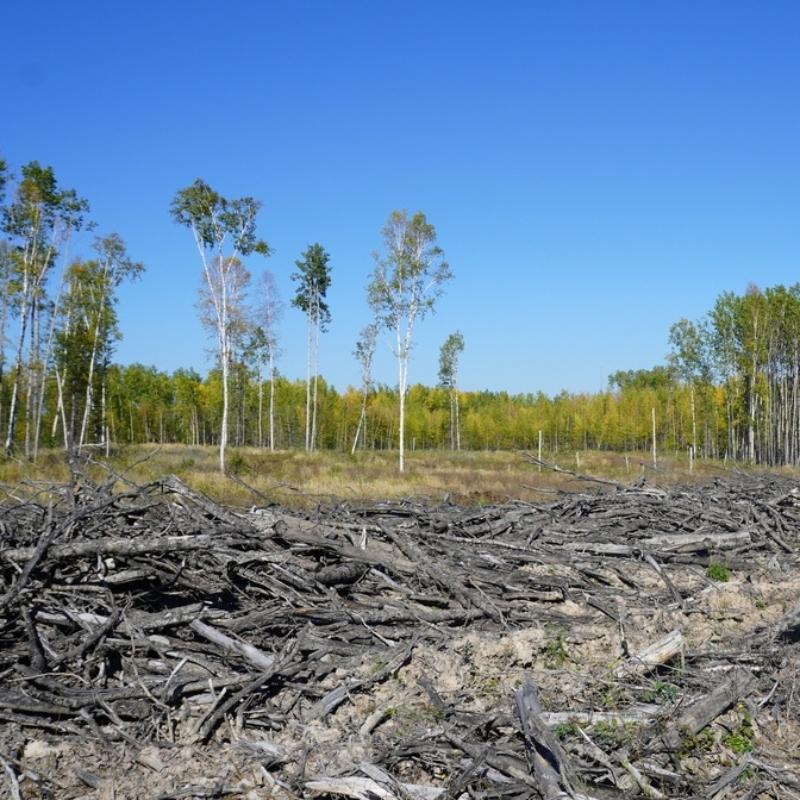
Retention trees and coarse woody debris provide protection to wildlife in open areas.
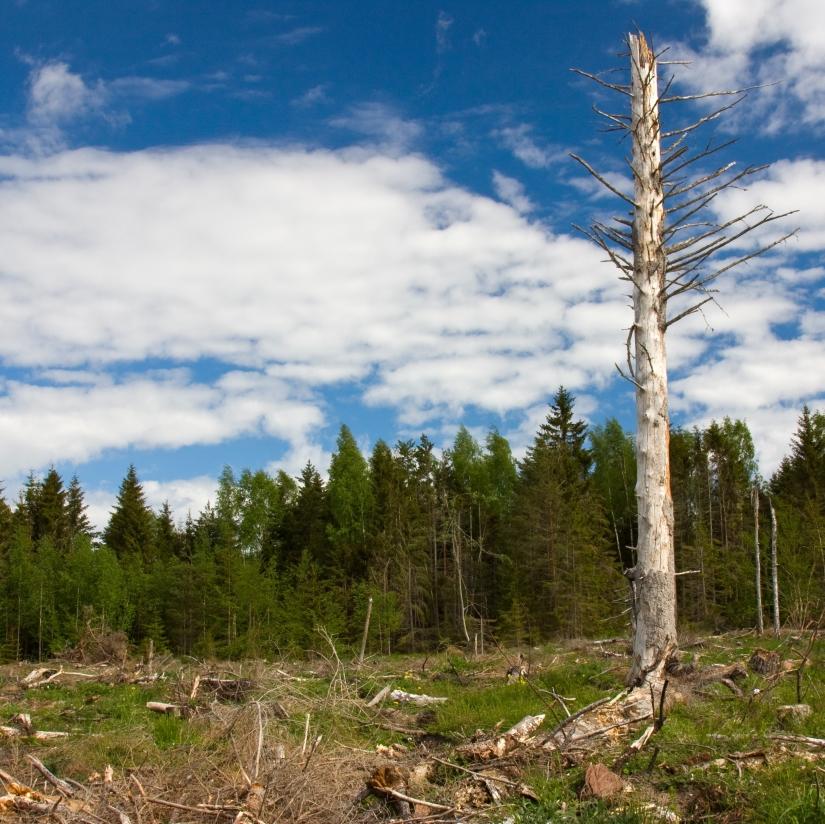
Snags retained in harvest areas provide habitat and forest structure.
Results
This research assessed sites in Alberta’s boreal forest that were disturbed ten years ago, either by wildfire or timber harvest, to determine whether ecosystem-based management strategies can effectively approximate forest characteristics after wildfire.
The results compare differences in tree mortality, deadwood (snags and coarse woody debris), and understory vegetation (species, cover, and traits) between retention patches vs. wildfire islands, interiors vs. edges, and patches vs. intact forest.
- Retention patches did not experience higher tree mortality than wildfire islands of similar size[1].
- Within both fire and harvest patches, Aspen had greater mortality than Spruce and smaller trees had greater mortality than large trees. Leaving residual Spruce could present a strategy to maintain canopy cover in regenerating forests[1].
- In both wildfire and harvest patches, there were about twice as many snags at the edges than in the interiors. This highlights that tree mortality is edge-driven, potentially due to exposure to more extreme growing conditions at edges which can increase mortality probability[2].
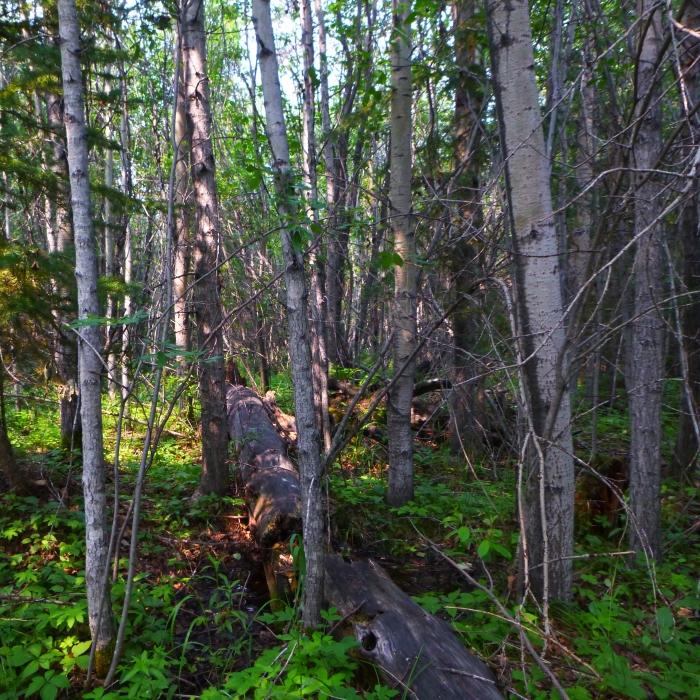
Aspen trees had higher rates of mortality, compared to Spruce species.
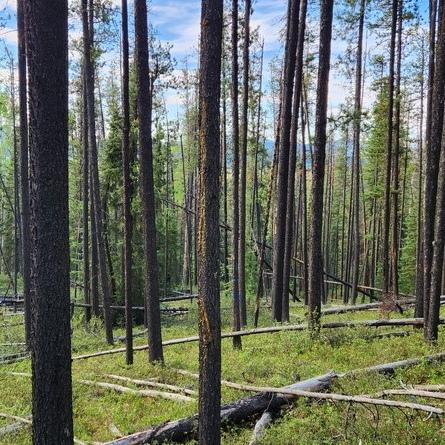
More tree mortality occurs at the edges of forests.
- Fire islands have more recently dead snags than retention patches reflecting higher immediate tree mortality after wildfire disturbance[2].
- Amounts of coarse woody debris are similar between fire and harvest patches[2,3].
- The number of trees in the stand before disturbance is a key driver of the amount of deadwood found in patches after both fire or harvest. More living trees means more material is available that can become deadwood after disturbance[3].
- Coarse woody debris volume was similar between edges and interiors in both harvest and wildfire patches[2], showing limited edge effect on coarse woody debris accumulation.
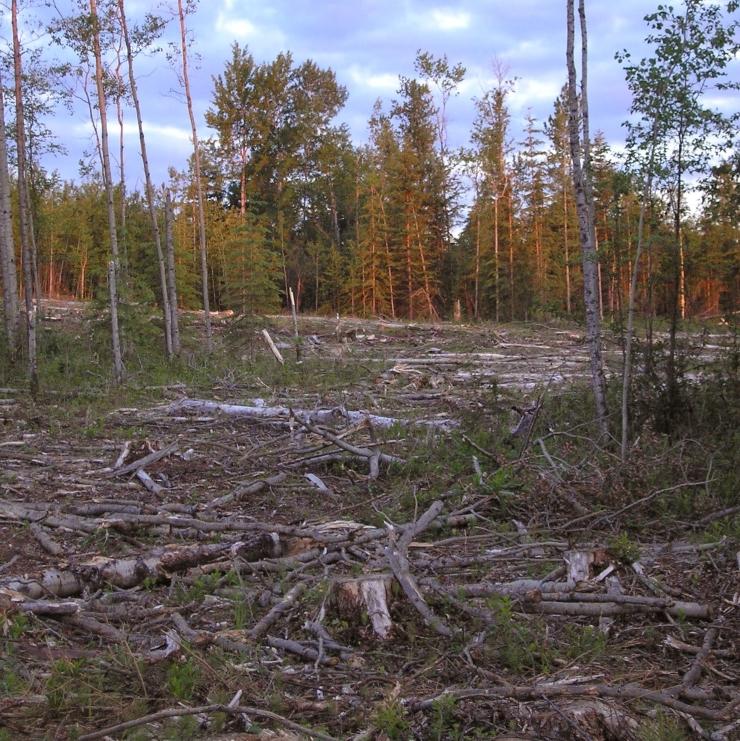
Amounts of coarse woody debris are similar between wildfire and harvest patches.

The number of trees present prior to a disturbance is a key driver in the amount of deadwood accumulating post-disturbance.
- Forested patches created by fire or harvest, retained understory plant communities and vegetation cover similar to intact forest.
- Plant characteristics such as heavy seeds and shade-tolerance were associated with forested patches, supporting their role as contributors to regeneration. Plants with characteristics associated with colonizing species, like producing numerous light seeds, were found in disturbed areas.
- Wildfire islands had more variety in the types of plants and their characteristics, likely because wildfires create more variation in habitat conditions than the carefully planned retention patches.
- Compared to interior forest, there were minimal edge-related differences in understory vegetation in both wildfire and retention patches.
- Overall, forest plant communities in harvest retention patches resemble communities in fire island remnants.
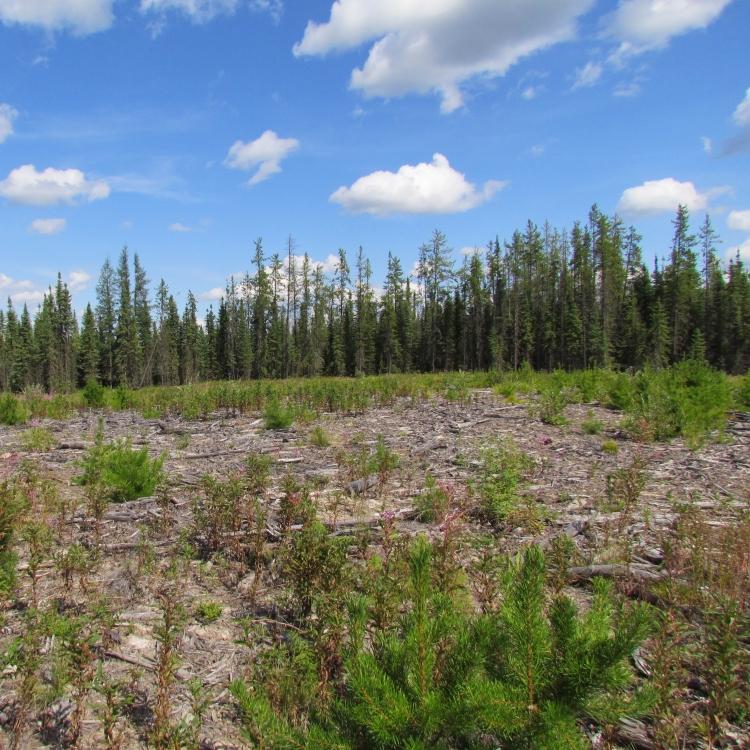
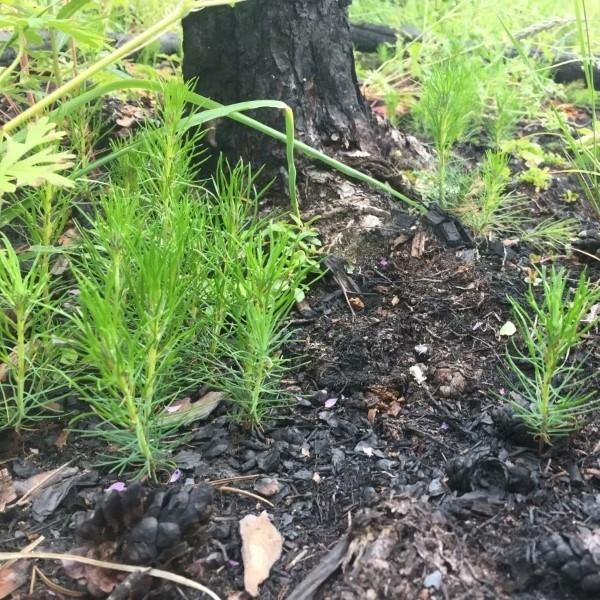
Pine trees begin regenerating when their cones are exposed to heat from wildfire or solar radiation.
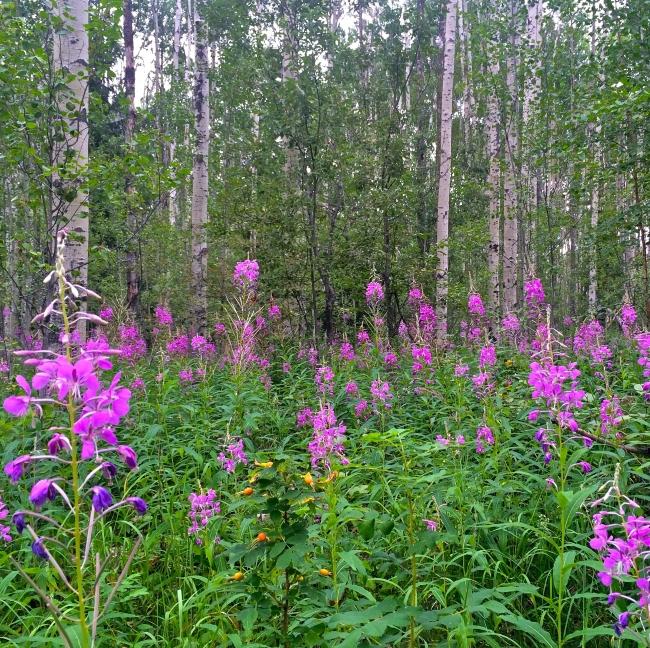
Fireweed is a colonizing species, with characteristics that allow it to establish quickly in disturbed areas.
Conclusion and Next Steps
This research offers support for well-designed forest harvesting that includes retention patches to maintain key functions of natural disturbances. Ecosystem-based management is a useful strategy for maintaining habitat complexity and supporting biodiversity. These insights help forest managers refine practices that balance timber production with ecosystem conservation.
The next step is to explore how these findings apply across different forest types in other regions of the province.
References
Odell, R.A., R. Osei, M. Schneider, L.P. Moore, T.A. Shovon, C.A. Nock. 2023. Species Identity and Tree Size Drive Residual Tree Mortality in Island Remnants in Burned and Harvested Boreal Forests. Forest Ecology and Management 549: 121474.
Osei, R., L.P. Moore, R.A. Odell, M. Schneider, T.A. Shovon, C.A. Nock. 2024. Fire and Retention Island Remnants Have Similar Deadwood Carbon Stock a Decade after Disturbances in Boreal Forests of Alberta. Forest Ecosystems 11: 100225.
Osei, R., C.A. Nock. 2025. Initial Stand Volume and Residual Live Trees Drive Deadwood Carbon Stocks in Fire and Harvest Disturbed Boreal Forests at North‐Central Alberta. Ecology and Evolution 15: e70710. Available at: https://onlinelibrary.wiley.com/doi/10.1002/ece3.70710.
Schneider, M., R. Odell, L. Moore, S.E. Macdonald, C.A. Nock. 2025. Do Harvest
Retention Patches in the Boreal Forest Emulate Those Resulting from Wildfire? A Comparison of Understory Vegetation a Decade after Disturbance. Journal of Applied Ecology 62(9): 2330–42. Available at: https://besjournals.onlinelibrary.wiley.com/doi/10.1111/1365-2664.70123.
Contributor
Charles's research interests are in forest ecology, global change, and the sustainable management of forests. In 2018, he founded the Ecosystem-based Forest Management Lab.