Collaborators
The ABMI acknowledges the valuable contributions of its partners.
.svg)



Introduction
The ABMI benefits from the strong support of various partners and collaborators, from our delivery partners (InnoTech Alberta, the University of Alberta, and the University of Calgary) to our many generous sponsors. A list of these vital contributors is available via the ABMI website, here.
Additionally, many organizations and individuals contribute data and expertise that enhance our program and the data and information products that result. Those who made specific contributions to this report are acknowledged below.
We are grateful to all of our partners and collaborators for their ongoing operational, financial, and scientific support.
Collaborators
Data Partners & Collaborators for the Al-Pac Report
Boreal Avian Modelling Centre
For the ABMI’s bird analyses, ABMI data are combined with data from the Boreal Avian Modelling (BAM) Centre. Within Alberta, the BAM database is a compilation of data from the Breeding Bird Survey (BBS), Breeding Bird Atlases, Environment and Climate Change Canada (ECCC), the Bayne Lab at the University of Alberta, other monitoring projects, and short-term research projects. In particular, the ABMI, BAM, and ECCC have enjoyed a long and mutually beneficial relationship during which both data and ideas have been shared. The data and information reported here substantially benefited from the aggregate dataset of these organizations, as well as the efforts and expertise of the collaborating scientists.
Alberta Environment and Protected Areas (EPA)
ABMI human footprint data are enhanced by a longstanding partnership with the Government of Alberta / Alberta Environment and Protected Areas (EPA) through the Alberta Human Footprint Monitoring Program. This partnership allows, for example, additional geospatial layers produced or maintained by the Government of Alberta to be incorporated into the ABMI's Human Footprint Inventory.
Environment & Climate Change Canada (ECCC)
Environment and Climate Change Canada (ECCC) supports the ABMI's work in a variety of ways. In 2019, acoustic experts from ECCC, the ABMI, the Bioacoustic Unit, and BAM came together to develop the next phase of acoustic data management for Canada, which has come to be called CanAvian (Canadian Network for Open Avian Data). This initiative, funded by ECCC, involves further functional development of the WildTrax platform, and increased standardization and data sharing across data management platforms like WildTrax and NatureCounts.

The Bayne Lab
The Bayne Lab at the University of Alberta, works to understand the cumulative ecological impacts of human and natural activities on biodiversity. They work closely with government, industry, and conservation organizations across Canada to advance the science of ecological monitoring using sensor technologies like autonomous recording units (ARUs) and wildlife cameras. The Bayne Lab is a leader in the application of wildlife acoustic data for environmental management and development of new methodologies to better understand acoustic environments.
Contributors
Contributors to the Al-Pac Report
Dr. Charles Nock
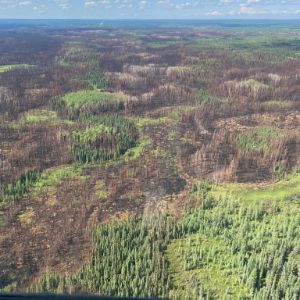
Dr. Charles Nock is an assistant professor of ecosystem-based forest management in the Department of Renewable Resources at the University of Alberta. Charles's research interests are in forest ecology, global change, and the sustainable management of forests. In 2018, he founded the Ecosystem-based Forest Management Lab. Find out about his research comparing forest characteristics of wildfire islands and harvest retention patches in Section 2.5: "Research Spotlight: Do Harvest Patches Mimic Natural Disturbance Patterns?"
Taylor Hart, PhD Student
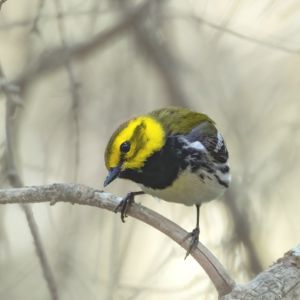
Taylor is a PhD student at the University of Alberta specializing in landscape ecology and population biology, focusing on boreal forest songbirds. Her research uses quantitative methods to examine how industrial activities—such as forestry and energy development—affect wildlife populations and biodiversity. She aims to conduct applied research that informs policy and conservation strategies, particularly for at-risk species in multi-use landscapes. Find out about her research examining how habitat loss and fragmentation affect two old-forest songbirds in Alberta’s boreal forest in Section 5.4: "Research Spotlight: Fragmentation Effects on at Risk Old-forest Birds."
Isabelle Lebeuf-Taylor, PhD Student
Isabelle is a PhD student at the University of Alberta. Her research interests lie in improving methods of linking bird populations to changing landscapes for more effective conservation. Find out about her research examining how variable retention in harvest areas can increase bird diversity in Section 5.5: "Research Spotlight: Variable Retention and Migratory Birds."