Previous Page:
1.2 Reporting Area and Landscape Context
Next Page:
1.3.1 Methods: Natural Landscape Indicators

Scroll for more

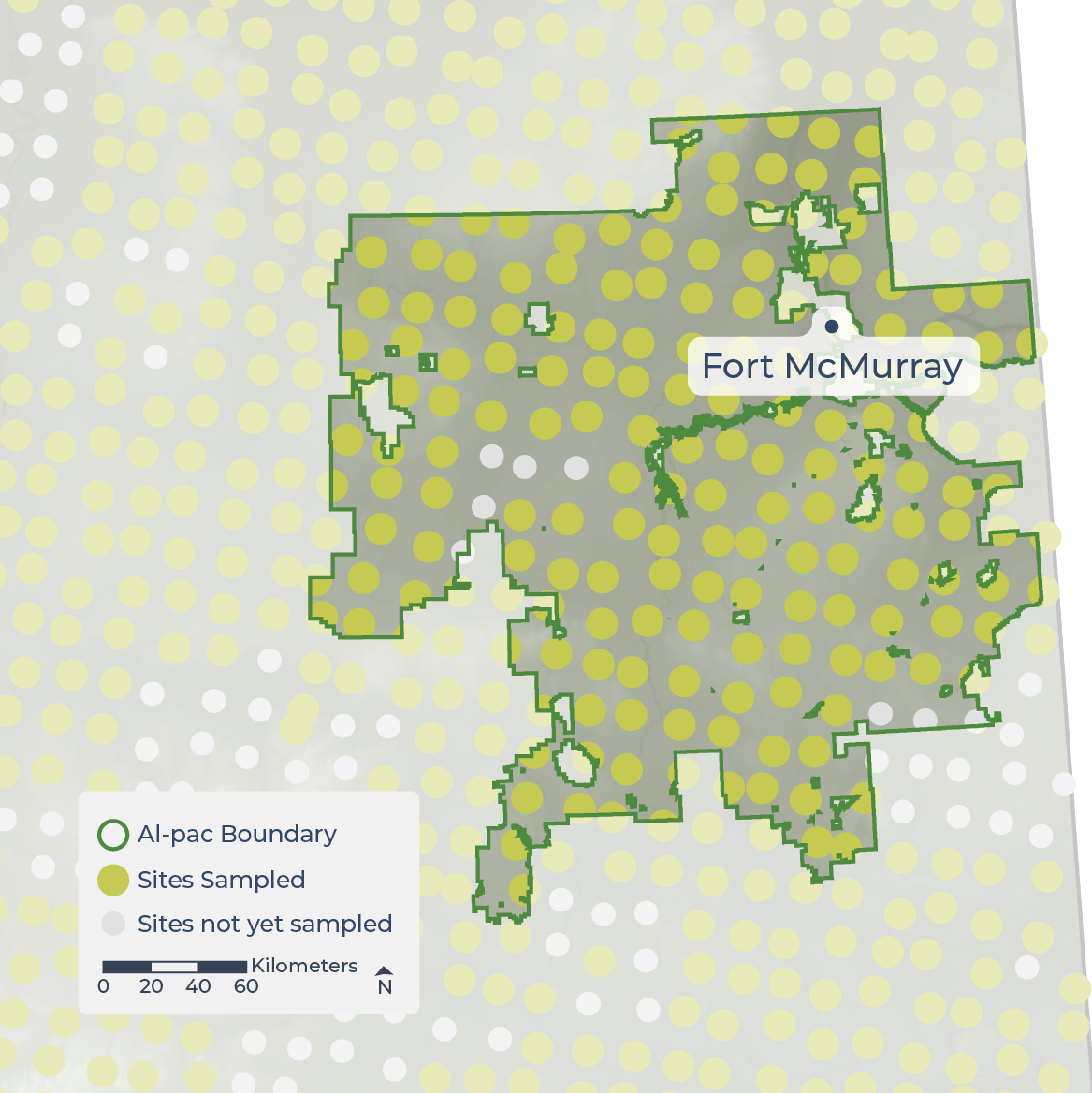
Number of ABMI sites in the Al-Pac FMA area:
153
The ABMI monitors the state of Alberta’s land cover and biodiversity, including in the Al-Pac FMA area.

Methods for ABMI indicators included in this report are summarized under three themes:

  • Natural Landscape Indicators: native vegetation, native cover, interior native habitat, and landscape connectivity.
  • Land Base Change Indicators: human footprint, land base change, forest age, and linear feature density.
  • Biodiversity Indicators: Biodiversity Intactness Index, sector effects, and attribution of species habitat change.

Monitoring Sites. Location of ABMI monitoring sites within Al-Pac’s FMA area. Data from these sites, along with additional off-grid sampling, were used to report on biodiversity indicators.

Introduction

From the boreal forest in the north to the grasslands in the south, the ABMI monitors the state of land cover and biodiversity across the province of Alberta.

The ABMI employs a systematic grid of 1,656 site locations, spaced 20 km apart, to collect biodiversity information, including species and habitat data, at both terrestrial and wetland sites[1]. We also monitor at other “targeted” sites as needed to address additional monitoring and research objectives.

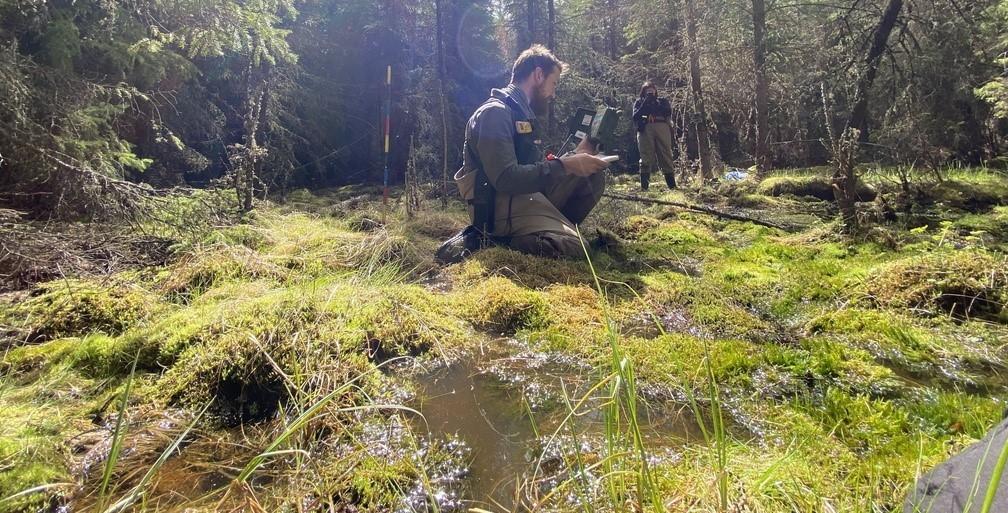
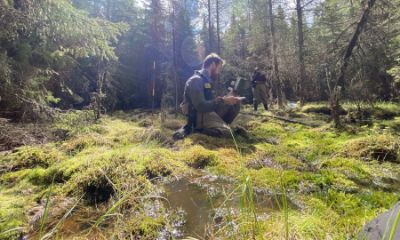
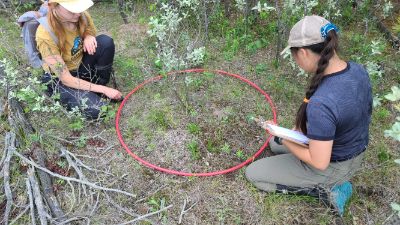
At each location, ABMI technicians record the species that are present and measure a variety of habitat characteristics. For species that cannot be identified in the field (e.g., soil mites, lichens), samples are sent to ABMI taxonomists to sort, identify, and archive to complete the institute’s species-level dataset.

In addition to the ABMI's species monitoring, the ABMI uses remote sensing data and tools to map and monitor Alberta's landscapes and human footprint. One of our principal goals is to understand the distribution of land cover types at a given point in time and how habitats have changed or are changing. This work brings together diverse data (e.g., ground, airborne, space-borne) and a range of tools and technologies (e.g., cloud-computing, machine learning, photogrammetry) to produce map products and datasets. These products are used to summarize land cover indicators across the province.

Methods in this section are organized into three indicator themes: Natural Landscape Indicators, Land Base Change Indicators, and Biodiversity Indicators. Methods for the research spotlights are summarized in their respective sections, with references provided for full methodological details.

 
Click on a subsection to read methods for that indicator theme:
 
Devin Ewasiw
Section 1.3.1. Methods: Natural Landscape Indicators

Review the methods for the indicators summarized in Chapter 2: native vegetation (2.1), native cover (2.2), interior native habitat (2.3), and landscape connectivity (2.4).
Read More
Section 1.3.2. Methods: Land Base Change Indicators

Review the methods for the indicators summarized in Chapter 3: human footprint (3.1), land base change (3.2), and linear features (3.3).

Read More
Section 1.3.3. Methods: Biodiversity Indicators

Review the methods for the indicators summarized in Chapter 4 and 5: biodiversity intactness (4.1), sector effects (4.2), attribution of species habitat change (4.3), species of conservation concern (5.1), and non-native vascular plants (5.2).

Read More

References

1.

Alberta Biodiversity Monitoring Institute (ABMI). 2021. Terrestrial Field Data Collection Protocols (Abridged Version). Available at: https://abmi.ca/publication/601.html.

We are grateful for the support of the ABMI's delivery partners.